Led Zeppelin — Thunder, Myth, and the Architecture of Heavy Rock
When Led Zeppelin formed in 1968, rock music was already loud — but Zeppelin made it colossal.
Jimmy Page’s guitar carved out riffs like monuments, Robert Plant howled with blues-born fire,
John Paul Jones anchored it all with precision and texture,
and John Bonham struck the drums like a force of nature.
Their early albums didn’t just blend blues and rock — they amplified them into something mythic.
Tracks like "Whole Lotta Love" and "Black Dog" redefined what heavy could mean.
Zeppelin weren’t chasing singles — they were building atmosphere.
Then came Led Zeppelin IV.
With "Stairway to Heaven", they created one of rock’s most enduring compositions —
quiet folk beginnings rising into electric transcendence.
It became less a song and more a ritual.
Across the 70s, Zeppelin explored mysticism, acoustic folk, hard blues, and even world influences —
from "Kashmir" to "The Rain Song".
They proved heavy rock could be dynamic, expansive, and cinematic.
Milestones
- 1968: Band forms from the ashes of The Yardbirds.
- 1969: Release of Led Zeppelin I and II — blues-rock intensified.
- 1971: Led Zeppelin IV becomes one of the best-selling rock albums ever.
- 1975: Physical Graffiti expands their sonic universe.
- 1980: Band disbands following John Bonham’s death.
Iconic Albums
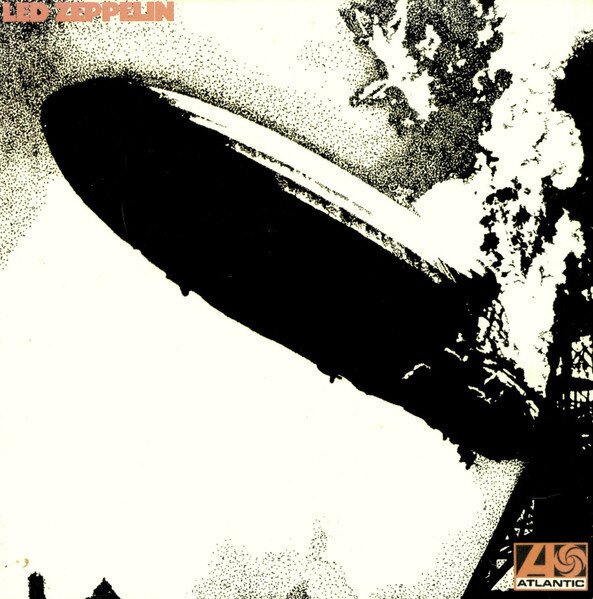
Led Zeppelin I (1969)
Raw blues power and the blueprint for heavy rock.
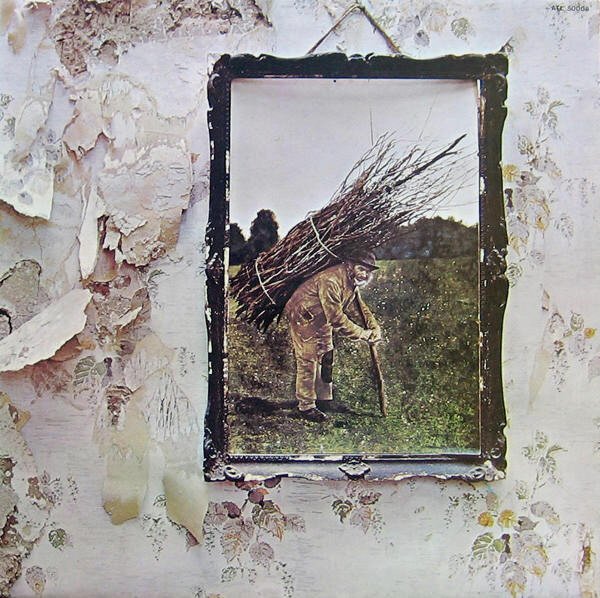
Led Zeppelin IV (1971)
The era-defining album featuring "Stairway to Heaven.”
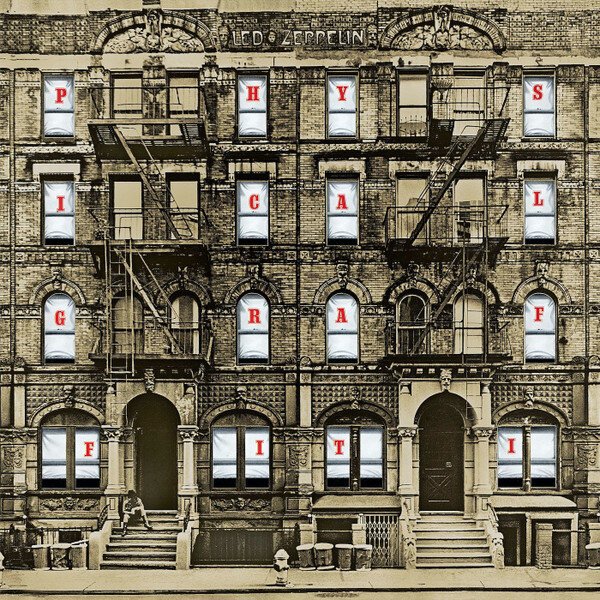
Physical Graffiti (1975)
A vast, ambitious double album stretching their creative range.
Essential Songs
- Whole Lotta Love
- Black Dog
- Stairway to Heaven
- Rock and Roll
- Kashmir
- The Rain Song
- Immigrant Song
- Dazed and Confused
Did You Know?
- The band avoided releasing many singles in the UK to focus on full albums.
- Led Zeppelin IV originally had no printed band name on the cover.
- John Bonham is widely regarded as one of rock’s most powerful drummers.